Showing posts with label Rules for Living. Show all posts
Showing posts with label Rules for Living. Show all posts
Thursday, October 19, 2017
Secrets of Irresistible People
Are you upset because people don't like you? Anxious to salvage your presidency? Here's an article from Forbes Magazine that may help - 11 Secrets of Irresistible People.
I won't go through all 11 of the secrets, but these six seem pretty important at this point in time:
They Treat Everyone with Respect. Using petty, high-school nicknames ("Crooked Hillary," "Lyin' Ted," and "Little Rocket Man") pretty much misses this mark;
They Follow the Platinum Rule. What's the platinum rule? It's a variation of the traditional Golden Rule (treat others as you would have them treat you) which says treat others as they wish to be treated. Of course, if you're dealing with a narcissist, this may be difficult;
They Focus on People More than Anything Else. Rather than thinking only about themselves, they genuinely care about other people;
They Recognize the Difference Between Fact and Opinion. Not too many people can do that nowadays;
They're Authentic. What you see is what you get ... you don't have to wonder where you stand with them; and,
They Have Integrity. Remember what that is?
I don't need to be irresistible, but I do want to be treated with dignity and respect, and I try to treat others the same way. It would be nice if we all felt the same way.
Have a good day. More thoughts tomorrow.
Bilbo


Wednesday, October 22, 2014
Rules for the Modern Man
You may well be tired of reading about various rules in this blog lately. After all, within the last month I offered some commentary on updated rules of chivalry, followed by rules to live by (Part 1 and Part 2). But at the risk of boring you with more rules than the US Code, I thought I'd share yet another set: rules for the modern man.
I first ran across an excerpt of the list on the website of James Michael Sama, the leader of the New Chivalry Movement, and then read the full list - The Unofficial Goldman Sachs Guide to Being a Man - here. Both lists are way too long ... here are a few items that caught my attention, with my commentary (of course):
1. If riding the bus doesn't incentivize you to improve your station in life, nothing will. I can't agree with this one. We have a nice car, but I ride the bus to work every day, and find it a great stress reliever to leave the driving in #%$@! DC traffic to someone else. Plus it gives me time to read (see #6 below) or catch a quick nap on the way to work. Trust me ... you are not too good to ride a bus.
2. You probably use your cell phone too often and at the wrong moments. No question about this one. There are a lot of eejits out there who would probably go into screaming withdrawal if they didn't have their phones.
3. Ask for a salad instead of fries. I should have done this years ago. Sigh.
4. Do not use an electric razor. I have yet to find an electric razor that will give a clean, close shave that lasts more than a few hours. If you just need to touch up in the evening or before a big meeting, it's probably okay ... but in general, I think electric razors are a waste of money.
5. Staying angry is a waste of energy. In general, I agree with this one. But sometimes there's a source of anger that just begs to be kept stoked. I have one of those, and he knows who he is.
6. Read more. It allows you to borrow someone else’s brain, and will make you more interesting at a dinner party – provided that you don’t initiate conversation with, “So, who are you reading …” This is a no-brainer. And if you want to be a no-brainer, don't read.
And finally ...
7. #StopItWithTheHashtags. Oh, heavens yes! It would be hard to tell you how sick I am of seeing a hashtag on everything. Let's go back to a simpler time, when the hashtag just told you how much the hash cost down at the local diner.
Do you have any rules you follow for modern living? Leave a comment and let us know.
Have a good day. Remember that "rules are for the obedience of fools and the guidance of wise men.”
More thoughts tomorrow.
Bilbo
Monday, October 20, 2014
Rules to Live By, Part 2
The first half of my list of rules to live by, published last week, was a big hit with everyone - numerous comments indicated that you were waiting with bated breath for the second half of the list. Wait no more, Dear Readers ... here it is!
Everybody is somebody else's weirdo. I guess that would be me, eh?
Never argue with idiots. They drag you down to their level then beat you with experience. This is why I don't like to get into discussions with political and religious zealots.
I have the power to channel my imagination into ever-soaring levels of suspicion and paranoia. Consider the omnipresent bumper sticker: "I'm the NRA, and I vote!" 'Nuff said
The complete lack of evidence is the surest sign that the conspiracy is working. Yes! Yes, it is!
A closed mouth gathers no feet. Corollary: a closed mouth is extraordinarily rare among the nattering classes.
Never attribute to malice that which is adequately explained by stupidity. It's the combination of malice and stupidity that you have to worry about.
Anything is possible if you don't know what you're talking about. Such as getting a job as a shouting head on Faux News.
It's easier to ask forgiveness than gain permission. It's how we get things done!
It's easier to fix the blame than to fix the problem. See: Congress
When all's said and done, a lot more is said than done. See: Congress.
For any given large, complex, hard-to-understand, expensive problem, there exists at least one short, simple, easy, cheap answer. It is wrong. And someone on Faux News will be demanding that the president be impeached because he's not doing it.
Chaos, panic, and disorder - my work here is done! Time for another election.
Nothing is impossible for the person who doesn't have to do it himself. Oh, so true.
If everything is going exactly according to plan, something somewhere is going catastrophically wrong. Been there, experienced that.
Fast - cheap - good: you can have any two. This is the Prime Directive of major acquisition programs.
To estimate a plan, work out how long it would take one person to do it then multiply that by the number of people on the project. Corollary: it takes one woman nine months to have a baby, no matter how many men you put on the job.
Warning: dates in the calendar are closer than you think. And they move more quickly than you can imagine.
That's the end of the list for now. Add your contributions in the comments ... there's room for a lot more!
Have a good day. More thoughts tomorrow.
Bilbo
Wednesday, October 15, 2014
Rules to Live By
There's a lot of wisdom out there on the Internet, if you just know where to look. Hint ... none of it is on any website sponsored by any politician, PAC, or Super PAC. There's a huge collection of pearls of wisdom on a website designed for military planners, from which I have selected these (with my commentary, of course) ...
Sometimes too much to drink is not enough. Like during election season.
The facts, although interesting, are irrelevant. As you know if you watch any political ads or suffer through any political robocalls.
If you think there's good in everybody, you haven't met everybody. Yep.
There is always one more imbecile than you counted on. So true, so true ...
Nothing is foolproof to a sufficiently talented fool. No shortage of those around DC.
The early bird gets the worm, but the second mouse gets the cheese. Think about it ...
Support bacteria - they're the only culture some people have. How very true!
When everything's coming your way, you're in the wrong lane, going the wrong way. Been there ...
For every action, there is an equal and opposite criticism. If you watch the news coverage of Congress, you know this is true.
Artificial Intelligence is no match for Natural Stupidity. This one is as true as it gets.
Never underestimate the power of very stupid people in large groups. 435 or more?

My Reality Check bounced. NSR - Not Sufficient Reality.
On the keyboard of life, always keep one finger on the escape key. Good advice. Unfortunately, it doesn't work.
That's the first half of the list. I'll publish the rest in a few days. You'll want to be here ... there's something for everyone.
Have a good day. More thoughts tomorrow.
Bilbo
Thursday, September 25, 2014
Rules Your Children Won't Learn in School
As I look back on my life and consider the lessons I would want to share with my children and grandchildren, I don't know if there's a better punch-in-the-gut summary of the real rules of life than this one. I don't remember where I originally found it, but I think it's worth sharing ...
Rule #1. Life is not fair. Get used to it. The average teenager uses the phrase It's not fair! 8.6 times a day*. You got it from your parents, who said it so often you decided they must be the most idealistic generation ever. When they started hearing it from their own kids, they understood Rule #1.
Rule #2. The real world won't care as much about your self-esteem as your school does. It expects you to accomplish something before you feel good about yourself. This may come as a shock. Usually, when inflated self-esteem meets reality, kids complain that it's not fair (see Rule #1)
Rule #3. Sorry, you won't make $100,000 a year right out of high school. And you won't be a vice president or have a company car or phone or iPad, either. You may even have to wear a uniform that has your name, rather than a Gap label on it.
Rule #4. If you think your teacher is tough, wait 'til you get a boss. He doesn't have tenure, so he tends to be a bit edgier. When you screw up, he is not going ask you how feel about it.
Rule #5. Flipping burgers is not beneath your dignity. Your grandparents had a different word for burger flipping. They called it opportunity. They weren't embarrassed making minimum wage either. They would have been embarrassed to sit around talking about the latest web sensation all weekend.
Rule #6. It's not your parents' fault. If you screw up, you are responsible. This is the flip side of It's my life, You're not the boss of me, and other eloquent proclamations of your generation. When you turn 18, it's on your dime. Don't whine about it or you'll sound like a Gen Xer.
Rule #7. Before you were born your parents weren't as boring as they are now. They got that way paying your bills, cleaning up your room and listening to you tell them how idealistic you are. And by the way, before you save the rain forest from the blood-sucking parasites of your parents' generation try delousing the closet in your bedroom.
Rule #8. Life is not divided into semesters, and you don't get summers off. Nor even Easter break. Your employer expects you to show up for eight hours or more every day, volunteer for extra work, and not ask for ridiculous things like overtime pay. And you don't get a new life every 10 weeks. It just goes on and on.
Rule #9. Television is not real life. Your life is not a sitcom or a "reality" show. Your problems will not all be solved in 30 minutes, minus time for commercials. In real life, people actually have to leave the sandwich shop to go to jobs. Your friends will not be perky or as polite as the ones on those Disney Channel shows.
Rule #10. Be nice to nerds. You may end up working for them. We all could.
Rule #11. Enjoy life while you can. Sure, parents are a pain, school's a bother, and life is depressing. But someday you'll realize how wonderful it was to be kid. Maybe you should start now.

Have a good day. Teach your children the right rules. More thoughts tomorrow.
Bilbo
* My granddaughter Leya is only 7, and she uses it, too. A lot.
Bilbo
* My granddaughter Leya is only 7, and she uses it, too. A lot.
Thursday, February 09, 2012
Sex
As I try to build readership in the lead-up to my sixth blogoversary (coming up on March 8th!), I figured I might as well try using some words that will resonate well with search engines and draw unsuspecting readers to my little corner of cyberspace. Sex seemed like a pretty good choice, since we spend most of our early lives looking for it and most of our later lives trying to remember why we were looking for it and what to do if we actually find it. Don't ask me how I know that.
"I blame my mother for my poor sex life. All she told me was 'the man goes on top and the woman underneath.' For three years my husband and I slept in bunk beds." (Joan Rivers)
"I'm a terrible lover. I've actually given a woman an anti-climax." (Scott Roeben)
"Anyone who says that gratuitous sex is no substitute for gratuitous violence obviously hasn't had enough gratuitous sex." (Geoff Spear)
"I love sex. It's free and doesn't require special shoes." (Anonymous)
"Sexual intercourse is kicking death in the ass while singing." (Charles Bukowski)
"Despite a lifetime of service to the cause of sexual liberation, I have never caught venereal disease, which makes me feel rather like an Arctic explorer who has never had frostbite." (Germaine Greer)
"I think sex is better than logic, but I can't prove it." (Anonymous)
"For me, love is very deep, but sex only has to go a few inches." (Stacy Nelkin)
"Housework is like bad sex. Every time I do it I swear I will never do it again. Until the next time company comes." (Marilyn Sokol)
"During sex I fantasize that I'm someone else." (Richard Lewis)
"There is nothing safe about sex. There never will be." (Norman Mailer)
"The only difference between friends and lovers is about four minutes." (Scott Roeben)
"It's hard to be funny when you have to be clean." (Mae West)
"There's nothing inherently dirty about sex, but if you try real hard and use your imagination you can overcome that." (Lewis Grizzard)
"For flavor, instant sex will never supercede the stuff you have to peel and cook." (Quentin Crisp)
"Nothing makes you forget about love like sex." (Staci Beasley)
"I read so many bad things about sex that I had to give up reading." (Anonymous)
"Sex and golf are the two things you can enjoy even if you're not good at them." (Kevin Costner, in the film Tin Cup)
"I'm a great lover, I'll bet." (Emo Philips)
"Just saying 'no' prevents teenage pregnancy the way 'Have a nice day'cures chronic depression." (Faye Wattleton)
"I like my sex the way I play basketball, one on one with as little dribbling as possible." (Leslie Nielsen)
"I have no luck with women. I once went on a date and asked the woman if she'd brought any protection. She pulled a switchblade on me." (Scott Roeben)
"Science is a lot like sex. Sometimes something useful comes of it, but that's not the reason we're doing it." (Richard Feynman)
"Sex is identical to comedy in that it involves timing." (Phyllis Diller)
"One half of the world cannot understand the pleasures of the other." (Jane Austen)
"If sex doesn't scare the cat, you're not doing it right." (Anonymous)
"Sex is good, but not as good as fresh sweet corn." (Garrison Keillor)
"I've tried several varieties of sex. The conventional position makes me claustrophobic and the others give me a stiff neck or lockjaw." (Tallulah Bankhead)

Here's what some of the famous and not-so-famous have had to say about sex ...
"Anyone who says that gratuitous sex is no substitute for gratuitous violence obviously hasn't had enough gratuitous sex." (Geoff Spear)
"I love sex. It's free and doesn't require special shoes." (Anonymous)
"Sexual intercourse is kicking death in the ass while singing." (Charles Bukowski)
"Despite a lifetime of service to the cause of sexual liberation, I have never caught venereal disease, which makes me feel rather like an Arctic explorer who has never had frostbite." (Germaine Greer)
"I think sex is better than logic, but I can't prove it." (Anonymous)
"For me, love is very deep, but sex only has to go a few inches." (Stacy Nelkin)
"Housework is like bad sex. Every time I do it I swear I will never do it again. Until the next time company comes." (Marilyn Sokol)
"During sex I fantasize that I'm someone else." (Richard Lewis)
"There is nothing safe about sex. There never will be." (Norman Mailer)
"The only difference between friends and lovers is about four minutes." (Scott Roeben)
"It's hard to be funny when you have to be clean." (Mae West)
"There's nothing inherently dirty about sex, but if you try real hard and use your imagination you can overcome that." (Lewis Grizzard)
"For flavor, instant sex will never supercede the stuff you have to peel and cook." (Quentin Crisp)
"Nothing makes you forget about love like sex." (Staci Beasley)
"I read so many bad things about sex that I had to give up reading." (Anonymous)
"Sex and golf are the two things you can enjoy even if you're not good at them." (Kevin Costner, in the film Tin Cup)
"I'm a great lover, I'll bet." (Emo Philips)
"Just saying 'no' prevents teenage pregnancy the way 'Have a nice day'cures chronic depression." (Faye Wattleton)
"I like my sex the way I play basketball, one on one with as little dribbling as possible." (Leslie Nielsen)
"I have no luck with women. I once went on a date and asked the woman if she'd brought any protection. She pulled a switchblade on me." (Scott Roeben)
"Science is a lot like sex. Sometimes something useful comes of it, but that's not the reason we're doing it." (Richard Feynman)
"Sex is identical to comedy in that it involves timing." (Phyllis Diller)
"One half of the world cannot understand the pleasures of the other." (Jane Austen)
"If sex doesn't scare the cat, you're not doing it right." (Anonymous)
"Sex is good, but not as good as fresh sweet corn." (Garrison Keillor)
"I've tried several varieties of sex. The conventional position makes me claustrophobic and the others give me a stiff neck or lockjaw." (Tallulah Bankhead)
"The position is ridiculous, the pleasure momentary, and the expense damnable." (Lord Chesterfield)
Now to sit back and watch the hit counter. This ought to be interesting.
Have a good day. Practice safe sex ...
More thoughts tomorrow.
Bilbo
Sunday, August 21, 2011
Better Late Than (Bleeping) Never
Those of you who came looking for this post early this morning (or at the equivalent time wherever you are) were probably disappointed to find today's post not there. It happens. I slept this morning until the unheard-of hour of 7 AM, then got up and took Nessa for a walk, then drove to Panera to shoot something for breakfast, and just as we were sitting down to breakfast, our daughter called to invite us to a grandchildren-sitting opportunity which lasted well into the afternoon. Then we had to run errands, and then I had to get my hair cut, and then ... well ... it's now almost 6 PM, and if I don't get this written now, it won't get written at all.

So...
There was a very timely and interesting op-ed article by Kathleen Parker in this morning's Washington Post that I thought I'd share with you. It was titled "Land of the Bleeping Free" in the print edition, and "What's Wrong with These Bleeping People?" online. The topic, as you might have guessed, is the prevalence of very loud and exceedingly vulgar speech in public ... so prevalent that I saw this sign in Virginia Beach a while back:
In the interest of full disclosure, I will note that I am not above cursing like the proverbial longshoreman on occasion ... but I tend to be selective of those occasions. I would never dream of launching a top-volume salvo of "f-bombs," or using "m-f'ing" in place of every second adjective, particularly in public and especially where young children are within hearing. If you need a symbol of our diminished standards of civility, common decency, and basic education, it's tough to find a more noisy and offensive example than the language of many young (and, okay, not-so-young) and thoughtless boors nowadays. Ms Parker writes,
"Good behavior is nothing but good manners, simply consideration of others. Recently out of vogue, manners get hauled out the way most people attend church — at Easter and Christmastime. But manners aren’t just gray-haired pretensions practiced by smug elites on special occasions. They are the daily tithes we willingly surrender to civilization. An “MF” here or an “FU” there might not constitute the unraveling of society, but each one uttered in another’s involuntary presence is a tiny act of violence against kindness, of which we surely could use more."
And, because I couldn't have said it much better myself, I'll just end it here.
Have a good day. More thoughts - hopefully, on time - tomorrow.
Bilbo
P.S. - I'm reminded of the old New England adage that says, "If you're going to break the silence, be sure you can improve on it."
B.
Wednesday, April 20, 2011
Ultimate Truths of the Universe
I think I set a new record yesterday for number of comments received on a single post. But since I can't write about armpits every day, I guess I should look for something else with which to entertain you today. How about this abridged list of the Ultimate Truths of the Universe (with my commentary, of course)?
1. Indecision is the key to flexibility.
2. You can't tell which way the train went by looking at the track (And even if you're on the right track, the train will run over you if you don't keep moving).
3. There is absolutely no substitute for a genuine lack of preparation.
4. Happiness is merely the remission of pain (This is related to the classic admonition that "the beatings will continue until morale improves")
5. Nostalgia isn't what it used to be (The "good old days" weren't necessarily good...just old).
6. Sometimes too much to drink is not enough (Bilbo's Corollary: any problem is easier to face if you've stockpiled enough gin, tonic water, and fresh limes).
7. The facts, although interesting, are irrelevant (This is intended to be a factual statement, Senator Kyl).
8. The careful application of terror is also a form of communication (A truth not lost on al Qaeda, Hamas, and the dumbass who added discussion of "death panels for granny" to arguments about health care reform).
9. Someone who thinks logically is a nice contrast to the real world (And has no future in politics).
10. Things are more like they are today than they ever were before.
11. Anything worth fighting for is worth fighting dirty for (The first rule of modern politics).
12. Everything should be made as simple as possible, but no simpler (Otherwise, Republicans and Democrats won't be able to understand it).
13. Friends may come and go, but enemies accumulate.
14. I have seen the truth, and it makes no sense (This is actually a memorable quote from G.K. Chesterton that you may recognize as my personal motto).
15. Suicide is the most sincere form of self-criticism (Unfortunately, you can only use it once, and you're not likely to benefit from the insights).
16. If you think there is good in everybody, you haven't met everybody.
17. All things being equal, fat people use more soap.
18. If you can smile when things go wrong, you've figured out who to blame.
19. One seventh of your life is spent on Monday (Mike can tell you how much of it is spent on Friday the 13th).
20. Every time you make ends meet, some ass clown moves the ends.
21. Not one shred of evidence supports the notion that life is serious (And nobody gets out of it alive).
22. The more you run over a dead cat, the flatter it gets.
23. There is always one more imbecile than you counted on (This is related to the classic observation that foolproof plans never allow for the ingenuity of fools).
24. You may think this is as bad as it can get, but don't count on it (The 2012 presidential race is coming).
25. Never wrestle a pig. You both get dirty and the pig likes it.
Have I missed anything? Add your personal ultimate truths to the comments.
2. You can't tell which way the train went by looking at the track (And even if you're on the right track, the train will run over you if you don't keep moving).
3. There is absolutely no substitute for a genuine lack of preparation.
4. Happiness is merely the remission of pain (This is related to the classic admonition that "the beatings will continue until morale improves")
5. Nostalgia isn't what it used to be (The "good old days" weren't necessarily good...just old).
6. Sometimes too much to drink is not enough (Bilbo's Corollary: any problem is easier to face if you've stockpiled enough gin, tonic water, and fresh limes).
7. The facts, although interesting, are irrelevant (This is intended to be a factual statement, Senator Kyl).
8. The careful application of terror is also a form of communication (A truth not lost on al Qaeda, Hamas, and the dumbass who added discussion of "death panels for granny" to arguments about health care reform).
9. Someone who thinks logically is a nice contrast to the real world (And has no future in politics).
10. Things are more like they are today than they ever were before.
11. Anything worth fighting for is worth fighting dirty for (The first rule of modern politics).
12. Everything should be made as simple as possible, but no simpler (Otherwise, Republicans and Democrats won't be able to understand it).
13. Friends may come and go, but enemies accumulate.
14. I have seen the truth, and it makes no sense (This is actually a memorable quote from G.K. Chesterton that you may recognize as my personal motto).
15. Suicide is the most sincere form of self-criticism (Unfortunately, you can only use it once, and you're not likely to benefit from the insights).
16. If you think there is good in everybody, you haven't met everybody.
17. All things being equal, fat people use more soap.
18. If you can smile when things go wrong, you've figured out who to blame.
19. One seventh of your life is spent on Monday (Mike can tell you how much of it is spent on Friday the 13th).
20. Every time you make ends meet, some ass clown moves the ends.
21. Not one shred of evidence supports the notion that life is serious (And nobody gets out of it alive).
22. The more you run over a dead cat, the flatter it gets.
23. There is always one more imbecile than you counted on (This is related to the classic observation that foolproof plans never allow for the ingenuity of fools).
24. You may think this is as bad as it can get, but don't count on it (The 2012 presidential race is coming).
25. Never wrestle a pig. You both get dirty and the pig likes it.
Have I missed anything? Add your personal ultimate truths to the comments.
Have a good day. More thoughts tomorrow.
Bilbo
Sunday, January 23, 2011
Two Wolves
Our language is awash in all sorts of expressions and stories, the origins of which are lost in time or obscurity. You've no doubt heard gazillions of probably-apocryphal stories that are "old Irish/Chinese/African/Indian sayings," or "found in an old church," or something similar.
Since my hands are still not quite thawed out from walking Nessa this morning (it's 16 big degrees outside my study window), I'm just going to minimize the typing and share with you this alleged "old Indian" story that I've heard in many forms over the years ... most recently from my friend Bob who is always good for blogging material. Regardless of its provenance, it's a good story with a useful message. It's the story of the two wolves ...
"One evening an old Indian told his grandson about a battle that goes on inside people. He said, 'My son, the battle is between two wolves inside us all.
'One is Evil - It is anger, envy, jealousy, sorrow, regret, greed, arrogance, self-pity, guilt, resentment, inferiority, lies, false pride, superiority, and ego.
'The other is Good - It is joy, peace, love, hope, serenity, humility, kindness, benevolence, empathy, generosity, truth, compassion and faith.'"
"The boy thought about it for a minute and then asked the grandfather: 'Which wolf wins?'"
"His grandfather replied, 'The one you feed.'"
Have a good day. Stay warm and feed the right wolf.
More thoughts tomorrow.
Bilbo
Thursday, January 13, 2011
Set 'em Up, Barkeep!
We all know what a terrible scourge alcoholism can be, and what its cost to society is in terms of ruined health, broken families, and deaths from alcohol-related accidents. For all that, though, the social imbibing of alcohol is an integral part of most societies. The workingman's beer and the executive's cocktail aid relaxation at the end of a long day, and a nice glass of the right wine can make even a simple dinner a more pleasant experience. For yours truly, a nice gin and tonic is a gift of the gods of summer.

So, we have this love-hate relationship with good old C2H5OH. We know how dangerous it can be, but we love it anyway.
And a new study seems to indicate that abstaining from alcohol can be hazardous to your health ... I call your attention to this fascinating short article from the Mother Nature Network - Study: Abstaining from Alcohol Significantly Shortens Life.
According to the article, a rigorous 20-year study of 1,824 persons between 55 and 65 revealed that only 41 percent of the moderate drinkers died compared to 69 percent of the nondrinkers, once economic, social, other environmental factors had been controlled. The study seemed to show conclusively that, in spite of the increased risk of accidents and impaired judgment associated with heavy drinking, the danger of alcohol addiction, and increased susceptibility to various cancers and diseases associated with alcoholism, those who drink alcohol in moderation are simply less likely to die than people who don't.
The article goes on to suggest that ...
A possible explanation for this is that alcohol can be a great social lubricant, and strong social networks are essential for maintaining mental and physical health. Nondrinkers have been shown to demonstrate greater signs of depression than their carousing counterparts, and in addition to the potential heart health and circulation benefits of moderate drinking (especially red wine), it also increases sociability.
I'll drink to that. Responsibly, of course.
Have a good day. Here's mud in your eye!
More thoughts tomorrow.
Bilbo
Wednesday, September 01, 2010
Picking the Right Gift
When things are as bad as they are across the board (lousy economy, murderous religious bigots, hurricane Earl, Bristol Palin on Dancing with the Stars, etc), it's good to try to think about the things that aren't so bad. No matter how bad things may get, there's always some reason to celebrate. And there's an industry that has sprung up to take advantage of it. Would Valentine's Day have taken off without the support of the greeting card, candy, and florist industries? And don't you enjoy all those traditional displays of Christmas merchandise that start appearing in stores before Labor Day?
Which brings me to today's topic: anniversary gifts.
Someone has actually compiled a list of "traditional" and "modern" wedding anniversary gifts. You can see the entire list here, but here's a short summary for you so that you know what you're supposed to get for your beloved. Or for the person you haven't divorced yet, whichever...
First: Traditional - Paper; Modern - Clocks.
Second: Traditional - Cotton; Modern - China
Third: Traditional - Leather; Modern - Crystal or Glass
Fourth: Traditional - Fruit or Flowers; Modern - Appliances (yeah, fellows, she'll really like that vacuum cleaner)
Fifth: Traditional - Wood; Modern - Silverware
Tenth: Traditional - Tin or Aluminum; Modern - Diamond Jewelry (I wonder who was responsible for that update...)
Twentieth: Traditional - China; Modern - Platinum
Thirtieth: Traditional - Pearl; Modern - Diamond
Fortieth: Traditional and Modern - Ruby
Fiftieth: Traditional and Modern - Gold
Sixtieth: Traditional and Modern - Diamond
My advice: get divorced before the tenth anniversary, then re-marry (the same person, if you like). That resets the gift clock and saves you money, paper and clocks, cotton, and china being much cheaper than diamonds, platinum, rubies, and gold.
Anybody have any other ideas for updating the anniversary gift list? Viagra, Depends, and walkers are not out of the question.
Have a good day. Celebrate something. More thoughts tomorrow.
Bilbo
Which brings me to today's topic: anniversary gifts.
Someone has actually compiled a list of "traditional" and "modern" wedding anniversary gifts. You can see the entire list here, but here's a short summary for you so that you know what you're supposed to get for your beloved. Or for the person you haven't divorced yet, whichever...
First: Traditional - Paper; Modern - Clocks.
Second: Traditional - Cotton; Modern - China
Third: Traditional - Leather; Modern - Crystal or Glass
Fourth: Traditional - Fruit or Flowers; Modern - Appliances (yeah, fellows, she'll really like that vacuum cleaner)
Fifth: Traditional - Wood; Modern - Silverware
Tenth: Traditional - Tin or Aluminum; Modern - Diamond Jewelry (I wonder who was responsible for that update...)
Twentieth: Traditional - China; Modern - Platinum
Thirtieth: Traditional - Pearl; Modern - Diamond
Fortieth: Traditional and Modern - Ruby
Fiftieth: Traditional and Modern - Gold
Sixtieth: Traditional and Modern - Diamond
My advice: get divorced before the tenth anniversary, then re-marry (the same person, if you like). That resets the gift clock and saves you money, paper and clocks, cotton, and china being much cheaper than diamonds, platinum, rubies, and gold.
Anybody have any other ideas for updating the anniversary gift list? Viagra, Depends, and walkers are not out of the question.
Have a good day. Celebrate something. More thoughts tomorrow.
Bilbo
Thursday, August 12, 2010
The Dying Art of Being Nice
By now you've surely heard of the flight attendant who finally snapped. Details of the story vary, but apparently it went something like this: after being mistreated by a passenger, flight attendant Steven Slater cursed the passenger out over the intercom, took a beer from the galley, opened the cabin door, deployed the escape slide, slid to the ground, and went home, where he was later arrested on a variety of charges. He's now out on bail, and a hero.
So, did he do the right thing?
Lizzie Post, a spokesperson for the Emily Post Institute, suggested that the Federal Aviation Administration (FAA) needs to set a code of conduct for passengers to match the informal Passengers' Bill of Rights grudgingly and loosely agreed to by the airlines. She also noted that...
"there should have been a system in place that was clear to passengers that when they buy a ticket they must abide by certain rules. This binding code should be focused on safety, and safety alone. Behavior issues -- children kicking the seat in front of them, say, and other annoyances are not on the same magnitude: they are etiquette problems, to be dealt with, but not matters for the F.A.A."
Writing yesterday in the New York Times, commentator Benet Wilson agreed that airline passenger behavior has grown worse recently. She blamed it in part on a reaction to the many inconveniences and indignities that air passengers face, but said that...
"...the solution isn't to impose a code of passenger behavior. Creation and enforcement of more rules would only create a whole new set of problems for both passengers and flight attendants. Airlines should work with their flight attendants to come up with common sense guidelines that passengers can live with but will also be enforced."
AAAARRRRGGGGHHHH!!!! She said common sense! Is she crazy?
Well, no. Not really.
The fundamental problem is one of a lack of good manners and the diminishing level of simple politeness in our interpersonal relations. Instead of treating each other with kindness and goodwill, many people insist on a level of perceived respect that they are unwilling to show to others. While it's true that the airlines have driven passengers to distraction with swarms of new fees and charges, smaller seats, unexplained delays, and other indignities large and small, passengers haven't reacted with much patience and goodwill, either.
I'm no saint, of course. I can be just as nasty as the next guy (well, unless the next guy is Kim Jong Il), but I like to think that it takes a fair amount of effort on the other person's part to get me to be that way. I've always believed, like my mother used to say, that you catch more flies with honey than with vinegar...and she and my father constantly impressed on us the importance of politeness and good manners.
Today, sadly, politeness is often viewed as weakness to be exploited rather than a noble quality to be appreciated. Respect is demanded, but not given in return. We're reduced to suggesting - as Lizzie Post did - that government impose rules to force us to behave. At one time, parents did that.
Our favorite local restaurant has a prominently-displayed sign that reads, "Be nice or get out."
Which, after all, isn't such a bad policy.
Have a good day. Be nice. More thoughts tomorrow.
Bilbo
So, did he do the right thing?
Lizzie Post, a spokesperson for the Emily Post Institute, suggested that the Federal Aviation Administration (FAA) needs to set a code of conduct for passengers to match the informal Passengers' Bill of Rights grudgingly and loosely agreed to by the airlines. She also noted that...
"there should have been a system in place that was clear to passengers that when they buy a ticket they must abide by certain rules. This binding code should be focused on safety, and safety alone. Behavior issues -- children kicking the seat in front of them, say, and other annoyances are not on the same magnitude: they are etiquette problems, to be dealt with, but not matters for the F.A.A."
Writing yesterday in the New York Times, commentator Benet Wilson agreed that airline passenger behavior has grown worse recently. She blamed it in part on a reaction to the many inconveniences and indignities that air passengers face, but said that...
"...the solution isn't to impose a code of passenger behavior. Creation and enforcement of more rules would only create a whole new set of problems for both passengers and flight attendants. Airlines should work with their flight attendants to come up with common sense guidelines that passengers can live with but will also be enforced."
AAAARRRRGGGGHHHH!!!! She said common sense! Is she crazy?
Well, no. Not really.
The fundamental problem is one of a lack of good manners and the diminishing level of simple politeness in our interpersonal relations. Instead of treating each other with kindness and goodwill, many people insist on a level of perceived respect that they are unwilling to show to others. While it's true that the airlines have driven passengers to distraction with swarms of new fees and charges, smaller seats, unexplained delays, and other indignities large and small, passengers haven't reacted with much patience and goodwill, either.
I'm no saint, of course. I can be just as nasty as the next guy (well, unless the next guy is Kim Jong Il), but I like to think that it takes a fair amount of effort on the other person's part to get me to be that way. I've always believed, like my mother used to say, that you catch more flies with honey than with vinegar...and she and my father constantly impressed on us the importance of politeness and good manners.
Today, sadly, politeness is often viewed as weakness to be exploited rather than a noble quality to be appreciated. Respect is demanded, but not given in return. We're reduced to suggesting - as Lizzie Post did - that government impose rules to force us to behave. At one time, parents did that.
Our favorite local restaurant has a prominently-displayed sign that reads, "Be nice or get out."
Which, after all, isn't such a bad policy.
Have a good day. Be nice. More thoughts tomorrow.
Bilbo
Thursday, August 05, 2010
Gimme That Old Time Religion...No, Not THAT One, THIS One...
One of the big topics of the day, earning far more newspaper column inches and hot air by volume than it is worth, is the push by the Cordoba Initiative to build a 15-story "Islamic Community Center" (including a mosque) on property it owns in New York City, about two blocks from Ground Zero, where the twin towers of the World Trade Center once stood.
Passions are running high on all sides of the issue. If you read any report on the topic on CNN online, then read the hundreds of comments that are posted to it, you will find the most amazingly broad cross-section of opinion from the thoughtful to the call-somebody-to-bring-a-canvas-jacket-for-this-guy. There's nothing like a "discussion" of religion to bring out the best...or the worst...in people.
As it happens, I am on record as being utterly opposed to the construction of this Islamic center. You can read my earlier post on the subject here. And those of you who are my Facebook friends saw the thought that I posted on my page yesterday, asking why - if its purpose is to increase interfaith understanding and tolerance - the Cordoba Initiative didn't use the money to build a church in Mecca.
Oh, wait...you can't do that. It's illegal to build a church in Saudi Arabia. Never mind.
One of my good friends posted an answering comment, in which she said,
"...from what I hear, those people actually purchased the property way before 9 -11. They decided to build this year and it is two blocks away from ground zero. I just want to know where does the demarcation line for ground zero start or end?"
In her own gentle way, she has both made my point and missed it.
We have the wonderful opportunity to live in America, a country founded in part on the guarantee of religious freedom - freedom for each individual to worship (or not) according to the dictates of his (or her) conscience (check out the First Amendment!) and specifically forbidding the imposition of any sort of religious test for a candidate for public office (see Article VI). Because we enjoy religious freedom, we - all of us, regardless of our form of worship - enjoy the freedom to build our church or mosque or synagogue or other place of worship anywhere we choose. But, as I pointed out in another context in yesterday's post, the fact that we can do something doesn't necessarily mean we should do it.
The construction of an Islamic center near Ground Zero is perfectly legal as long as it conforms to the local zoning ordinances. It's legal, but is it right? In my own humble opinion, the best that can be said of the construction of a mosque in this location is that it is an act of staggering insensitivity. Even if we give the benefit of the doubt to the Cordoba Initiative and grant that it is sincere in its desire to advance interfaith understanding (and I'm not completely convinced of that), the simple fact is that the construction of a mosque in this location will be viewed by the radical Islamic fringe as a symbol of victory over a nation and a people they despise.
Obviously, not every Muslim is a heartless fanatic bent on murdering everyone who fails to see the overwhelming supremacy of his beliefs. But when Muslims of good faith fail to condemn those murderous religious bigots, they offer their tacit support to the radical fringe. When Muslims insist that theirs is a religion of peace and understanding, but refuse to accept the legitimacy of any other beliefs, it doesn't do much for the advancement of interreligious harmony. My opinion remains the same as it has always been: that it is not Christians and Jews, Americans and Europeans, who must strive to understand and accommodate Islamic beliefs ... it is the Islamic world which must accommodate itself to living in a religiously diverse and tolerant 21st century.
The construction of a simple church in Mecca, rather than a 15-story Islamic Community Center and mosque near Ground Zero, would be a wonderful example of the sincere desire of Muslims of good will to live in peace and understanding with their neighbors of other faiths.
But I'm not holding my breath.
Have a good day. More thoughts tomorrow.
Bilbo
Passions are running high on all sides of the issue. If you read any report on the topic on CNN online, then read the hundreds of comments that are posted to it, you will find the most amazingly broad cross-section of opinion from the thoughtful to the call-somebody-to-bring-a-canvas-jacket-for-this-guy. There's nothing like a "discussion" of religion to bring out the best...or the worst...in people.
As it happens, I am on record as being utterly opposed to the construction of this Islamic center. You can read my earlier post on the subject here. And those of you who are my Facebook friends saw the thought that I posted on my page yesterday, asking why - if its purpose is to increase interfaith understanding and tolerance - the Cordoba Initiative didn't use the money to build a church in Mecca.
Oh, wait...you can't do that. It's illegal to build a church in Saudi Arabia. Never mind.
One of my good friends posted an answering comment, in which she said,
"...from what I hear, those people actually purchased the property way before 9 -11. They decided to build this year and it is two blocks away from ground zero. I just want to know where does the demarcation line for ground zero start or end?"
In her own gentle way, she has both made my point and missed it.
We have the wonderful opportunity to live in America, a country founded in part on the guarantee of religious freedom - freedom for each individual to worship (or not) according to the dictates of his (or her) conscience (check out the First Amendment!) and specifically forbidding the imposition of any sort of religious test for a candidate for public office (see Article VI). Because we enjoy religious freedom, we - all of us, regardless of our form of worship - enjoy the freedom to build our church or mosque or synagogue or other place of worship anywhere we choose. But, as I pointed out in another context in yesterday's post, the fact that we can do something doesn't necessarily mean we should do it.
The construction of an Islamic center near Ground Zero is perfectly legal as long as it conforms to the local zoning ordinances. It's legal, but is it right? In my own humble opinion, the best that can be said of the construction of a mosque in this location is that it is an act of staggering insensitivity. Even if we give the benefit of the doubt to the Cordoba Initiative and grant that it is sincere in its desire to advance interfaith understanding (and I'm not completely convinced of that), the simple fact is that the construction of a mosque in this location will be viewed by the radical Islamic fringe as a symbol of victory over a nation and a people they despise.
Obviously, not every Muslim is a heartless fanatic bent on murdering everyone who fails to see the overwhelming supremacy of his beliefs. But when Muslims of good faith fail to condemn those murderous religious bigots, they offer their tacit support to the radical fringe. When Muslims insist that theirs is a religion of peace and understanding, but refuse to accept the legitimacy of any other beliefs, it doesn't do much for the advancement of interreligious harmony. My opinion remains the same as it has always been: that it is not Christians and Jews, Americans and Europeans, who must strive to understand and accommodate Islamic beliefs ... it is the Islamic world which must accommodate itself to living in a religiously diverse and tolerant 21st century.
The construction of a simple church in Mecca, rather than a 15-story Islamic Community Center and mosque near Ground Zero, would be a wonderful example of the sincere desire of Muslims of good will to live in peace and understanding with their neighbors of other faiths.
But I'm not holding my breath.
Have a good day. More thoughts tomorrow.
Bilbo
Sunday, July 11, 2010
Keeping Warm, Keeping Cool
This time about five months ago, it was colder than a well digger's ankles, colder than a penguin's backside, colder than a witch's ... uh ... bosom ... in a brass bra, colder than a mortgage banker's heart, colder than a ... well ... you get the picture. We had more than 24 inches of snow in our neighborhood, and couldn't get our car up the hill for about 4 days.
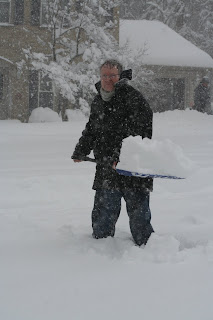 That was then, this is now.
Now, it's hotter than a two-dollar pistol, hotter than a Republican enraged by the very existence of the word liberal in the English language, hotter than a Saudi imam aghast at the sight of the smallest glimpse of uncovered female flesh, hotter than the hinges on the door to the boiler room of Hell in August.
It's hot, and I join everyone else in the metro area in bitching and complaining about it every bit as much as we bitched and complained about the cold back in February. There's just no satisfying some people, is there?
Which brings us to the topic of air conditioning ... or the lack thereof. Consider this interesting article from the Washington Post's "Department of What-If" this morning - "Try to Imagine D.C. Without So Much A.C."
If you've visited or lived in the nation's capital, you know how miserably hot and humid it can get here in the summer. The heat and humidity fall on you like a heavy, wet blanket, and a two-block walk to the bus stop leaves you wishing you'd used the time you spent taking a shower on something more useful. Every home, shop, office building and automobile is air-conditioned, and one of the angriest and most frequent complaints about the less-than-stellar performance of our public transit system is that the air conditioning doesn't work. In the summer, D.C. runs on A.C.
But it wasn't always that way. People survived perfectly well here without air conditioning all the way through the Revolutionary War, the Civil War, and World Wars I and II. The weather conditions were just as miserable, but people learned to cope, just as they cope every day in tropical regions where A.C. is not viewed as a fundamental necessity of life.
The article from today's Post talks about ways in which Washington might be different without our slavish reliance on air conditioning. We could close offices in the summer, wear loose cotton shirts (without neckties, YAY!!), and make more use of ceiling fans. We could use lighter-colored, heat-reflecting shingles and tiles on our roofs, and grill our meals outside instead of cooking them in a 450-degree oven in the kitchen. And who knows? - if we actually left the refrigerated sanctuary of our air-conditioned homes, we might meet our neighbors and develop better social lives.
The biggest benefit might come if we actually went back to the days before air conditioning, when Congress took a summer recess to beat the heat. Wouldn't it be nice if there was a period of a few months when, as New York Times columnist Russell Baker is quoted in the Post article as writing, "...the nation (could enjoy) a respite from the promulgation of more laws, the depredations of lobbyists, the hatching of new schemes for Federal expansion and, of course, the cost of maintaining a government running at full blast"?
Just imagine...
And, for the record, I'm writing this on my laptop, on the deck, in the shade of an umbrella. There's a little bit of a breeze, but it's just enough to make it bearable. But because there's only so much a spoiled man can take, I think I'll go back inside.
Have a good day. Stay cool. More thoughts tomorrow.
Bilbo
 That was then, this is now.
Now, it's hotter than a two-dollar pistol, hotter than a Republican enraged by the very existence of the word liberal in the English language, hotter than a Saudi imam aghast at the sight of the smallest glimpse of uncovered female flesh, hotter than the hinges on the door to the boiler room of Hell in August.
It's hot, and I join everyone else in the metro area in bitching and complaining about it every bit as much as we bitched and complained about the cold back in February. There's just no satisfying some people, is there?
Which brings us to the topic of air conditioning ... or the lack thereof. Consider this interesting article from the Washington Post's "Department of What-If" this morning - "Try to Imagine D.C. Without So Much A.C."
If you've visited or lived in the nation's capital, you know how miserably hot and humid it can get here in the summer. The heat and humidity fall on you like a heavy, wet blanket, and a two-block walk to the bus stop leaves you wishing you'd used the time you spent taking a shower on something more useful. Every home, shop, office building and automobile is air-conditioned, and one of the angriest and most frequent complaints about the less-than-stellar performance of our public transit system is that the air conditioning doesn't work. In the summer, D.C. runs on A.C.
But it wasn't always that way. People survived perfectly well here without air conditioning all the way through the Revolutionary War, the Civil War, and World Wars I and II. The weather conditions were just as miserable, but people learned to cope, just as they cope every day in tropical regions where A.C. is not viewed as a fundamental necessity of life.
The article from today's Post talks about ways in which Washington might be different without our slavish reliance on air conditioning. We could close offices in the summer, wear loose cotton shirts (without neckties, YAY!!), and make more use of ceiling fans. We could use lighter-colored, heat-reflecting shingles and tiles on our roofs, and grill our meals outside instead of cooking them in a 450-degree oven in the kitchen. And who knows? - if we actually left the refrigerated sanctuary of our air-conditioned homes, we might meet our neighbors and develop better social lives.
The biggest benefit might come if we actually went back to the days before air conditioning, when Congress took a summer recess to beat the heat. Wouldn't it be nice if there was a period of a few months when, as New York Times columnist Russell Baker is quoted in the Post article as writing, "...the nation (could enjoy) a respite from the promulgation of more laws, the depredations of lobbyists, the hatching of new schemes for Federal expansion and, of course, the cost of maintaining a government running at full blast"?
Just imagine...
And, for the record, I'm writing this on my laptop, on the deck, in the shade of an umbrella. There's a little bit of a breeze, but it's just enough to make it bearable. But because there's only so much a spoiled man can take, I think I'll go back inside.
Have a good day. Stay cool. More thoughts tomorrow.
Bilbo
Wednesday, June 23, 2010
The Flickering Blue Baby-Sitter
I admit it. I enjoy watching television sometimes. I have learned a great deal from watching television: that I am hopelessly in lust love with Evangeline Lilly, that there is a horrifying epidemic of erectile dysfunction, and that there are stern, lantern-jawed lawyers ready to take up my cause if I am threatened by the IRS, immigration authorities, junk lawsuits, or any of a wide range of ghastly, polysyllabic diseases caused by mendacious employers.
I have also learned that television can be, as it was once described by Newton Minnow, a vast wasteland, able to keep us sitting slack-jawed and drooling in front of the screen for hours on end. Much that is there to be seen is quite good (the Discovery Channel, the National Geographic Channel, the History Channel, and even the Food Network come to mind), but there is a great deal of mindless, brain-rotting drivel foisted off on us by those who would sell us soap, new cars, lawn services, or cures for diseases we've never heard of.
The problem has long been recognized. In a letter to his friend Goodman Ace, Groucho Marx once wrote,
"A child's mind must inevitably rot, looking at this dreary procession of nonsense night after night, and I think that the next ten years [he wrote this in 1960] will produce a population composed entirely of goons. I would kick Melinda's [his daughter] set to small chunks, but there's one in every room and I haven't got enough character to destroy six sets, two of them in color. I'm not trying to be comic about this. It disturbs me deeply that the TV set has become such an integral part of her life and the life of all her friends. When I was a kid, we used to read. I keep throwing books into Melinda's room but she keeps throwing them out. Last night she threw me out as well. For me, the only good thing about TV is that it has allowed me to earn far more money than I deserve."
I am pleased that my daughter is trying to keep granddaughter Leya occupied more with reading and free play than with television (the flickering blue baby-sitter, as it was once called), and that my other grandchildren's television time is carefully monitored to ensure that they (at least, the boys) are not spending their time watching the Spike or Playboy channels.
Agnes and I have three television sets in the house, and probably watch them a total of three or four hours per week. When we find a show we like, we usually wait and buy it on DVDs, which allow us to watch the shows without the "benefit" of endless commercials. Usually, though, we read.
The problem with television is that it requires attention to the images. Unlike radio, you can't just listen to it in the background as you do something else...you have to watch the accompanying images. You are committed to a single activity, which is allowing sponsors to pour stuff into your head through the hole opened by vapid programming. In moderation, this is probably okay. But if you are exposed for too long to the likes of SpongeBob SquarePants, Glenn Beck, Nancy Grace, and the images of legislators declaiming to acres of vacant seats on C-Span, your mind will eventually rot and run in greasy globs from your ears, causing ugly stains on the shoulders of your shirts.
It was also Groucho Marx who said that television was very educational, because whenever someone turned it on, he went into the next room and read a book. Perhaps that's good advice for all of us.
Enjoy your big-screen TV in moderation, but don't let it be the flickering blue baby-sitter - for yourself or for your children. Read, instead.
Have a good day. Read. Write letters. More thoughts tomorrow.
Bilbo
I have also learned that television can be, as it was once described by Newton Minnow, a vast wasteland, able to keep us sitting slack-jawed and drooling in front of the screen for hours on end. Much that is there to be seen is quite good (the Discovery Channel, the National Geographic Channel, the History Channel, and even the Food Network come to mind), but there is a great deal of mindless, brain-rotting drivel foisted off on us by those who would sell us soap, new cars, lawn services, or cures for diseases we've never heard of.
The problem has long been recognized. In a letter to his friend Goodman Ace, Groucho Marx once wrote,
"A child's mind must inevitably rot, looking at this dreary procession of nonsense night after night, and I think that the next ten years [he wrote this in 1960] will produce a population composed entirely of goons. I would kick Melinda's [his daughter] set to small chunks, but there's one in every room and I haven't got enough character to destroy six sets, two of them in color. I'm not trying to be comic about this. It disturbs me deeply that the TV set has become such an integral part of her life and the life of all her friends. When I was a kid, we used to read. I keep throwing books into Melinda's room but she keeps throwing them out. Last night she threw me out as well. For me, the only good thing about TV is that it has allowed me to earn far more money than I deserve."
I am pleased that my daughter is trying to keep granddaughter Leya occupied more with reading and free play than with television (the flickering blue baby-sitter, as it was once called), and that my other grandchildren's television time is carefully monitored to ensure that they (at least, the boys) are not spending their time watching the Spike or Playboy channels.
Agnes and I have three television sets in the house, and probably watch them a total of three or four hours per week. When we find a show we like, we usually wait and buy it on DVDs, which allow us to watch the shows without the "benefit" of endless commercials. Usually, though, we read.
The problem with television is that it requires attention to the images. Unlike radio, you can't just listen to it in the background as you do something else...you have to watch the accompanying images. You are committed to a single activity, which is allowing sponsors to pour stuff into your head through the hole opened by vapid programming. In moderation, this is probably okay. But if you are exposed for too long to the likes of SpongeBob SquarePants, Glenn Beck, Nancy Grace, and the images of legislators declaiming to acres of vacant seats on C-Span, your mind will eventually rot and run in greasy globs from your ears, causing ugly stains on the shoulders of your shirts.
It was also Groucho Marx who said that television was very educational, because whenever someone turned it on, he went into the next room and read a book. Perhaps that's good advice for all of us.
Enjoy your big-screen TV in moderation, but don't let it be the flickering blue baby-sitter - for yourself or for your children. Read, instead.
Have a good day. Read. Write letters. More thoughts tomorrow.
Bilbo
Thursday, April 29, 2010
Remembering to Forget
Depending on how long you've been with me on this blogging journey, you may remember a post I wrote back on December 17th of 2006 on the subject of forgetting...or, more accurately, not forgetting. That post was based on an interesting observation by Lance Morrow in his book Evil: An Investigation - in discussing the mutual, visceral hatreds of all sides in the wreckage of what was once Yugoslavia, he asked a simple, but profound question: what happens if no one ever forgets?
He was addressing the issue of lingering hatreds ... the endless nursing of deadly grudges and animosities that prevents people from making peace and moving on to a better future. Israelis and Palestinians in the Levant, Serbs, Croats and Muslims in the former Yugoslavia, Armenians and Turks, blacks and whites, North Koreans and everyone else - what happens when we never forget past ills, real or imagined?
Yesterday I found a new take on this idea in this article by Viktor Mayer-Schonberger - "Remembering the Importance of Forgetting."
In this article, Mr Mayer-Schonberger discusses what he calls "the permanancy of the past in the present," the fact that nothing digitally saved ever really goes away. Every e-mail you ever wrote, every document you ever saved, every digital photo you ever took tends to last forever, because storage is so cheap and easy that the default option today is save rather than delete.
I know it's true. When I bought my first computer in 1988, it had the biggest hard drive you could get at the time: a staggering 20 MB. I remember saying to Agnes, "Wow...20 megabytes...we'll never fill it up!" Today, of course, it's not unusual to have a single photo or document that's 20 MB or larger. When the 250 gigabtyte hard drive on my Mac failed a few months ago, I replaced it with a 1 terabyte drive...and the local stores are selling 1.5 and 2 terabyte drives.
It's now easier just to save everything than to go to the trouble of figuring out what to delete. At the office, we get periodic stern messages from our IT managers warning us to archive or delete files because our shared storage drives are nearing capacity. For a project I'm now working on, I have at least seven different versions of the document stored...and there will no doubt be several others by the time all the coordination comments are adjudicated. Oh, and there are also many versions of the comment adjudication documents that I also have to save to show how we accommodated everyone's concerns.
It's worse at home. In the days of film cameras, we filled up a 12- or 24- or 36-shot roll of film, had it developed, threw away the bad pictures, and saved the best ones in photo albums and scrapbooks. Today's digital cameras allow us to take hundreds of pictures and only print the ones we decide we like...but there's no need to delete the others, because storage is cheap and easy. The picture file on my Mac is 17.83 gigabytes in size...and doesn't include all the pictures I've archived on CDs and DVDs, or the ones I haven't yet transferred over from my laptop to the new 1 terabyte drive on the Mac.
When Agnes and I vacationed in Alaska, I took over 1200 pictures in seven days. When we went to Mexico, I took thousands more. I have no idea how many pictures of the five grandchildren I have.
The default option is save ... up to the point where you no longer have any idea what you have, and what's really important. As Mr Mayer-Schonberg writes,
"...it is worth remembering that there is a lot of value in forgetting. Forgetting permits us to transcend details and generalize, to see the forest and not just the trees."
What if nobody ever forgets? What if we continually are able to dredge up information we'd forgotten was out there, that may no longer be valid but can be reinterpreted and taken out of context to create from the past a false image of the present? Mr Mayer-Schonberg writes that,
"...we are increasingly confronted with outdated information taken out of context, from anachronistic news stories to emotional e-mails and compromising pictures that we had long ago forgotten. For example, more and more employers are researching job applicants through Google and social-networking Web sites. There are already many cases of people being denied jobs or promotions because of what is unearthed. But these are reflections of a person’s past; they rarely provide accurate information about the present."
Can we put the digital toothpaste back in the tube (or, more accurately, squeeze more of it out)? Can we learn the need to delete the unnecessary as well as the need to save that which is truly important? Can we even tell the difference any more? What digital time bombs are waiting in our blogs and our Facebook pages, waiting to blow up in our faces?
It's worth thinking about.
We all know the old adage about digital documents: save early, save often. Perhaps now we need its companion adage: delete regularly, delete ruthlessly.
Because what if nobody ever forgets?
Have a good day. Delete something. More thoughts tomorrow.
Bilbo
He was addressing the issue of lingering hatreds ... the endless nursing of deadly grudges and animosities that prevents people from making peace and moving on to a better future. Israelis and Palestinians in the Levant, Serbs, Croats and Muslims in the former Yugoslavia, Armenians and Turks, blacks and whites, North Koreans and everyone else - what happens when we never forget past ills, real or imagined?
Yesterday I found a new take on this idea in this article by Viktor Mayer-Schonberger - "Remembering the Importance of Forgetting."
In this article, Mr Mayer-Schonberger discusses what he calls "the permanancy of the past in the present," the fact that nothing digitally saved ever really goes away. Every e-mail you ever wrote, every document you ever saved, every digital photo you ever took tends to last forever, because storage is so cheap and easy that the default option today is save rather than delete.
I know it's true. When I bought my first computer in 1988, it had the biggest hard drive you could get at the time: a staggering 20 MB. I remember saying to Agnes, "Wow...20 megabytes...we'll never fill it up!" Today, of course, it's not unusual to have a single photo or document that's 20 MB or larger. When the 250 gigabtyte hard drive on my Mac failed a few months ago, I replaced it with a 1 terabyte drive...and the local stores are selling 1.5 and 2 terabyte drives.
It's now easier just to save everything than to go to the trouble of figuring out what to delete. At the office, we get periodic stern messages from our IT managers warning us to archive or delete files because our shared storage drives are nearing capacity. For a project I'm now working on, I have at least seven different versions of the document stored...and there will no doubt be several others by the time all the coordination comments are adjudicated. Oh, and there are also many versions of the comment adjudication documents that I also have to save to show how we accommodated everyone's concerns.
It's worse at home. In the days of film cameras, we filled up a 12- or 24- or 36-shot roll of film, had it developed, threw away the bad pictures, and saved the best ones in photo albums and scrapbooks. Today's digital cameras allow us to take hundreds of pictures and only print the ones we decide we like...but there's no need to delete the others, because storage is cheap and easy. The picture file on my Mac is 17.83 gigabytes in size...and doesn't include all the pictures I've archived on CDs and DVDs, or the ones I haven't yet transferred over from my laptop to the new 1 terabyte drive on the Mac.
When Agnes and I vacationed in Alaska, I took over 1200 pictures in seven days. When we went to Mexico, I took thousands more. I have no idea how many pictures of the five grandchildren I have.
The default option is save ... up to the point where you no longer have any idea what you have, and what's really important. As Mr Mayer-Schonberg writes,
"...it is worth remembering that there is a lot of value in forgetting. Forgetting permits us to transcend details and generalize, to see the forest and not just the trees."
What if nobody ever forgets? What if we continually are able to dredge up information we'd forgotten was out there, that may no longer be valid but can be reinterpreted and taken out of context to create from the past a false image of the present? Mr Mayer-Schonberg writes that,
"...we are increasingly confronted with outdated information taken out of context, from anachronistic news stories to emotional e-mails and compromising pictures that we had long ago forgotten. For example, more and more employers are researching job applicants through Google and social-networking Web sites. There are already many cases of people being denied jobs or promotions because of what is unearthed. But these are reflections of a person’s past; they rarely provide accurate information about the present."
Can we put the digital toothpaste back in the tube (or, more accurately, squeeze more of it out)? Can we learn the need to delete the unnecessary as well as the need to save that which is truly important? Can we even tell the difference any more? What digital time bombs are waiting in our blogs and our Facebook pages, waiting to blow up in our faces?
It's worth thinking about.
We all know the old adage about digital documents: save early, save often. Perhaps now we need its companion adage: delete regularly, delete ruthlessly.
Because what if nobody ever forgets?
Have a good day. Delete something. More thoughts tomorrow.
Bilbo
Thursday, April 15, 2010
Job Opening
Jobs are scarce in a lot of places nowadays, but there's one job that's always available. Not everyone qualifies, and not everyone can do it well...but for those who can handle it, it's the best job in the world.
Courtesy of my friend Bob, here's the position description for the ultimate job...
POSITION TITLE: PARENT
OTHER TITLES:
Mom, Mommy, Mama, Ma
Dad, Daddy, Dada, Papa, Pop
JOB DESCRIPTION:
Long-term, team players needed, for challenging permanent work in an often chaotic environment. Candidates must possess excellent communication and organizational skills an be willing to work variable hours, which will include evenings and weekends and frequent 24 hour shifts on call. Some overnight travel required, including trips to primitive camping sites on rainy weekends and endless sports tournaments in far-away cities! Travel expenses not reimbursed. Extensive courier duties also required.
RESPONSIBILITIES:
Job offers lifetime tenure. Applicant must be willing to be hated, at least temporarily, until someone needs $5. Must be willing to bite tongue repeatedly. Also, must possess the physical stamina of a pack mule and be able to go from zero to 60 mph in three seconds flat in case, this time, the screams from the backyard are not someone just crying wolf. Must be willing to face stimulating technical challenges, such as small gadget repair, mysteriously sluggish toilets and stuck zippers. Must screen phone calls, maintain calendars and coordinate production of multiple homework projects. Must have ability to plan and organize social gatherings for clients of all ages and mental outlooks. Must be willing to be indispensable one minute, and an embarrassment the next. Must always hope for the best but be prepared for the worst. Must be willing to assume final, complete accountability for the quality of the end product. Responsibilities also include floor maintenance and janitorial work throughout the facility.
POSSIBILITIES FOR ADVANCEMENT AND PROMOTION:
None. Your job is to remain in the same position for years, without complaining, constantly retraining and updating your skills, so that those in your charge can ultimately surpass you
PREVIOUS EXPERIENCE:
None required (although it would be helpful). On-the-job training offered on a continually exhausting basis.
WAGES AND COMPENSATION:
Get this! You pay them! Offering frequent raises and bonuses. A balloon payment is due when they turn 18 because of the assumption that college will help them become financially independent. When you die, you give them whatever is left. The oddest thing about this reverse-salary scheme is that you actually enjoy it and wish you could only do more.
BENEFITS:
While no health or dental insurance, no pension, no tuition reimbursement, no paid holidays and no stock options are offered, this job supplies limitless opportunities for personal growth, unconditional love, and free hugs and kisses for life if you play your cards right.
Apply now with someone you love.
To all you parents out there...good luck. If you're a parent already, you know this is pretty accurate. If you're not yet a parent, someday you'll understand the understatement.
Have a good day. Be a good parent...someday, someone will thank you.
More thoughts tomorrow.
Bilbo
P.S. - today is tax day. If you haven't yet rendered Caesar's portion unto him, you have only a few hours left.
B.
Courtesy of my friend Bob, here's the position description for the ultimate job...
POSITION TITLE: PARENT
OTHER TITLES:
Mom, Mommy, Mama, Ma
Dad, Daddy, Dada, Papa, Pop
JOB DESCRIPTION:
Long-term, team players needed, for challenging permanent work in an often chaotic environment. Candidates must possess excellent communication and organizational skills an be willing to work variable hours, which will include evenings and weekends and frequent 24 hour shifts on call. Some overnight travel required, including trips to primitive camping sites on rainy weekends and endless sports tournaments in far-away cities! Travel expenses not reimbursed. Extensive courier duties also required.
RESPONSIBILITIES:
Job offers lifetime tenure. Applicant must be willing to be hated, at least temporarily, until someone needs $5. Must be willing to bite tongue repeatedly. Also, must possess the physical stamina of a pack mule and be able to go from zero to 60 mph in three seconds flat in case, this time, the screams from the backyard are not someone just crying wolf. Must be willing to face stimulating technical challenges, such as small gadget repair, mysteriously sluggish toilets and stuck zippers. Must screen phone calls, maintain calendars and coordinate production of multiple homework projects. Must have ability to plan and organize social gatherings for clients of all ages and mental outlooks. Must be willing to be indispensable one minute, and an embarrassment the next. Must always hope for the best but be prepared for the worst. Must be willing to assume final, complete accountability for the quality of the end product. Responsibilities also include floor maintenance and janitorial work throughout the facility.
POSSIBILITIES FOR ADVANCEMENT AND PROMOTION:
None. Your job is to remain in the same position for years, without complaining, constantly retraining and updating your skills, so that those in your charge can ultimately surpass you
PREVIOUS EXPERIENCE:
None required (although it would be helpful). On-the-job training offered on a continually exhausting basis.
WAGES AND COMPENSATION:
Get this! You pay them! Offering frequent raises and bonuses. A balloon payment is due when they turn 18 because of the assumption that college will help them become financially independent. When you die, you give them whatever is left. The oddest thing about this reverse-salary scheme is that you actually enjoy it and wish you could only do more.
BENEFITS:
While no health or dental insurance, no pension, no tuition reimbursement, no paid holidays and no stock options are offered, this job supplies limitless opportunities for personal growth, unconditional love, and free hugs and kisses for life if you play your cards right.
Apply now with someone you love.
To all you parents out there...good luck. If you're a parent already, you know this is pretty accurate. If you're not yet a parent, someday you'll understand the understatement.
Have a good day. Be a good parent...someday, someone will thank you.
More thoughts tomorrow.
Bilbo
P.S. - today is tax day. If you haven't yet rendered Caesar's portion unto him, you have only a few hours left.
B.
Monday, January 18, 2010
Name Dropping
The mental connection that led to this topic began with one of the entries in an interesting online article I bookmarked last month: 20 Secrets Your Waiter Will Never Tell You. Along with all the bad things you might have suspected, including stories of food dropped on the floor and rinsed under water before being put back on your plate, was this one:
"I get this call all the time: 'Is the chef there? This is so-and-so. I’m a good friend of his.' If you’re his good friend, you’d have his cell."
This is an example of the scummy art of name-dropping ... tossing the names of famous (or infamous, or - at least - notable) people with whom one claims to be friends, usually for the purpose of gaining some advantage (in the example above, a table at a crowded restaurant) or impressing the listener. It's also an example of how it doesn't always work.
I've always figured that if you need to invoke someone else's name to accomplish something or impress me, you are beyond help. I don't care who you know, I care about what you are.
Of course, my distaste with name-droppers may come from the fact that I don't know anyone whose name can be dropped for significant advantage. I tried telling people at the phone company that I was a friend of Mike's, and they said, "Mike who?" Then I clarified, and they said, "Mike who?" even louder. I thought about dropping Amanda's name while buying grandchildren supplies at Buy Buy Baby, but since the store is in Northern Virginia rather than Brisbane, I figured it probably wouldn't help. I also thought about dropping Jay's name, but then, I may want to run for office someday, and I already have all the skeletons in my closet that I need.
I wonder if I'm socially hampered by the fact that all my friends are Real People. Nah. Real People are fun. They're not pretentious. They're comfortable being who they are, and don't need to define themselves by a real or imagined connection to who they know. Of course, there are those people who don't need to invoke someone else's name because they're so impressed with themselves that they think the earth shakes when they walk by. You've probably had the experience of hearing someone (often at an airline counter, or trying to get past a bouncer at a fancy club) shout, "Do you know who I am?!?!?"
Sorry, if you don't know, I can't help you. Perhaps in this case, you need to invoke the name of someone else. Preferably someone with better manners.
Drop your own name. If you've taken care of it, it'll get you as far as you need to go.
Have a good day. More thoughts tomorrow.
Bilbo
"I get this call all the time: 'Is the chef there? This is so-and-so. I’m a good friend of his.' If you’re his good friend, you’d have his cell."
This is an example of the scummy art of name-dropping ... tossing the names of famous (or infamous, or - at least - notable) people with whom one claims to be friends, usually for the purpose of gaining some advantage (in the example above, a table at a crowded restaurant) or impressing the listener. It's also an example of how it doesn't always work.
I've always figured that if you need to invoke someone else's name to accomplish something or impress me, you are beyond help. I don't care who you know, I care about what you are.
Of course, my distaste with name-droppers may come from the fact that I don't know anyone whose name can be dropped for significant advantage. I tried telling people at the phone company that I was a friend of Mike's, and they said, "Mike who?" Then I clarified, and they said, "Mike who?" even louder. I thought about dropping Amanda's name while buying grandchildren supplies at Buy Buy Baby, but since the store is in Northern Virginia rather than Brisbane, I figured it probably wouldn't help. I also thought about dropping Jay's name, but then, I may want to run for office someday, and I already have all the skeletons in my closet that I need.
I wonder if I'm socially hampered by the fact that all my friends are Real People. Nah. Real People are fun. They're not pretentious. They're comfortable being who they are, and don't need to define themselves by a real or imagined connection to who they know. Of course, there are those people who don't need to invoke someone else's name because they're so impressed with themselves that they think the earth shakes when they walk by. You've probably had the experience of hearing someone (often at an airline counter, or trying to get past a bouncer at a fancy club) shout, "Do you know who I am?!?!?"
Sorry, if you don't know, I can't help you. Perhaps in this case, you need to invoke the name of someone else. Preferably someone with better manners.
Drop your own name. If you've taken care of it, it'll get you as far as you need to go.
Have a good day. More thoughts tomorrow.
Bilbo
Sunday, January 03, 2010
Praise the Lord and Pass the ... uh ... New Laws
During the Second World War, Frank Loesser wrote a popular song titled "Praise the Lord and Pass the Ammunition." It was written in response to the Japanese attack on Pearl Harbor, and told the story of a chaplain (known in military slang as a sky pilot) whose ship was under enemy air attack. The sailors asked him to say a prayer for them while they fired at the attacking planes, whereupon the chaplain put down his Bible, jumped into one of the ship's gun turrets, and began firing back at the enemy, shouting, "Praise the Lord and pass the ammunition!"
It was a very popular song at the time, and goes to the heart of the rather rocky relationship between violence and religion. The sacred writings of most religions offer some variant on the commandment "Thou shalt not kill," but also put an asterisk next to it to indicate the various loopholes (self-defense, participation in a "just war," "jihad," "getting rid of "infidels," and so on). Some religions urge the penalty of death for blasphemy, defined by Merriam Webster's Online Dictionary as, "1 a : The act of insulting or showing contempt or lack of reverence for God; b : The act of claiming the attributes of deity. 2 : Irreverence toward something considered sacred or inviolable." In his famous "Devil's Dictionary," Ambrose Bierce defined the related word impiety as "Your irreverence toward my deity."
Be patient, I'm getting to the point.
Mike beat me to a discussion of the law which came into effect in Ireland on January 1st, which makes blasphemy a crime punishable by a €25,000 ($35,800) fine. According to CNN (see the link in the last sentence), the law makes it a crime to say or publish anything "grossly abusive or insulting in relation to matters held sacred by any religion, thereby causing outrage among a substantial number of the adherents of that religion."
Now, Ireland is a traditionally Catholic country, and the Catholic Church takes a dim view of blasphemy, as do many other religions. But it's very clear to me that the purpose of the law is not so much to prevent the denigration of religious beliefs in general as it is to protect Ireland's people and economy from the sort of violent reactions that come from the Muslim world whenever there is a hint of criticism of Islamic beliefs in general or of the prophet Mohammed in particular. The violent reactions to Pope Benedict's speech at Regensburg in 2006 (in which he appeared to criticize Mohammed in the context of a scholarly discussion of reason and faith), the death sentence imposed on author Salman Rushdie by Ayatollah Khomeini of Iran over Rushdie's allegedly blasphemous book The Satanic Verses, and the widespread Islamic outrage and violence over the infamous Danish cartoons in 2005 are still fresh in the minds of countries with substantial Muslim minorities.
Is it wrong to criticize the deeply-held religious beliefs of another? What constitutes punishable criticism or blasphemy (could "Praise the Lord and Pass the Ammunition" be considered blasphemous)? What punishment is appropriate? Who decides? In a country like Saudi Arabia, there's no question about any of these: it's illegal to build a church or practice any religion other than Islam. Compare this to overwhelmingly Catholic Ireland, which not only has a relatively small Muslim population, but also a mosque and community center in Dublin to serve it.
Is it right to deliberately insult someone's religious beliefs? It may be boorish and mean-spirited, but should it be illegal in the context of a pluralistic society? I think not.
As John pointed out in his comment on Mike's post, the only winners in this situation are the government that collects the fines and the lawyers who prosecute or defend the cases. Religion is a matter of the heart, but is all too often disconnected from the brain.
What we need are not laws, but common sense and a little bit of fallback to the Golden Rule. This may be difficult for adherents of a religion that absolutely believes it's right and everyone else is wrong and needs to be shown The Way, forcibly if necessary, but perhaps there's hope.
Until then, we'll see nations fall back on stupid laws.
Have a good day. More thoughts tomorrow.
Bilbo
It was a very popular song at the time, and goes to the heart of the rather rocky relationship between violence and religion. The sacred writings of most religions offer some variant on the commandment "Thou shalt not kill," but also put an asterisk next to it to indicate the various loopholes (self-defense, participation in a "just war," "jihad," "getting rid of "infidels," and so on). Some religions urge the penalty of death for blasphemy, defined by Merriam Webster's Online Dictionary as, "1 a : The act of insulting or showing contempt or lack of reverence for God; b : The act of claiming the attributes of deity. 2 : Irreverence toward something considered sacred or inviolable." In his famous "Devil's Dictionary," Ambrose Bierce defined the related word impiety as "Your irreverence toward my deity."
Be patient, I'm getting to the point.
Mike beat me to a discussion of the law which came into effect in Ireland on January 1st, which makes blasphemy a crime punishable by a €25,000 ($35,800) fine. According to CNN (see the link in the last sentence), the law makes it a crime to say or publish anything "grossly abusive or insulting in relation to matters held sacred by any religion, thereby causing outrage among a substantial number of the adherents of that religion."
Now, Ireland is a traditionally Catholic country, and the Catholic Church takes a dim view of blasphemy, as do many other religions. But it's very clear to me that the purpose of the law is not so much to prevent the denigration of religious beliefs in general as it is to protect Ireland's people and economy from the sort of violent reactions that come from the Muslim world whenever there is a hint of criticism of Islamic beliefs in general or of the prophet Mohammed in particular. The violent reactions to Pope Benedict's speech at Regensburg in 2006 (in which he appeared to criticize Mohammed in the context of a scholarly discussion of reason and faith), the death sentence imposed on author Salman Rushdie by Ayatollah Khomeini of Iran over Rushdie's allegedly blasphemous book The Satanic Verses, and the widespread Islamic outrage and violence over the infamous Danish cartoons in 2005 are still fresh in the minds of countries with substantial Muslim minorities.
Is it wrong to criticize the deeply-held religious beliefs of another? What constitutes punishable criticism or blasphemy (could "Praise the Lord and Pass the Ammunition" be considered blasphemous)? What punishment is appropriate? Who decides? In a country like Saudi Arabia, there's no question about any of these: it's illegal to build a church or practice any religion other than Islam. Compare this to overwhelmingly Catholic Ireland, which not only has a relatively small Muslim population, but also a mosque and community center in Dublin to serve it.
Is it right to deliberately insult someone's religious beliefs? It may be boorish and mean-spirited, but should it be illegal in the context of a pluralistic society? I think not.
As John pointed out in his comment on Mike's post, the only winners in this situation are the government that collects the fines and the lawyers who prosecute or defend the cases. Religion is a matter of the heart, but is all too often disconnected from the brain.
What we need are not laws, but common sense and a little bit of fallback to the Golden Rule. This may be difficult for adherents of a religion that absolutely believes it's right and everyone else is wrong and needs to be shown The Way, forcibly if necessary, but perhaps there's hope.
Until then, we'll see nations fall back on stupid laws.
Have a good day. More thoughts tomorrow.
Bilbo
Monday, November 16, 2009
Really Tall Women
There's an interesting article in CNN Online's Living section: Are You Man Enough to Date Tall Women?
The article was written by a lady who says she is six feet, one inch tall ... "ridiculously tall," as she describes it. She then goes on to offer five bits of advice to men on dating very tall women, four of which follow:
1. Stay away from the cheesy lines. Duh. Cheesy lines are dumb, anyway. Ladies usually recognize them, and such lines result in the flipping of the mental switch to the "he's a dumbass" position.
2. Get over it. Meaning, don't worry about how tall she is. We're all the same size on the inside, after all. Unless she's using her height to intimidate you, who cares?
3. Treat her like a lady. Duh. She's a lady, after all, height notwithstanding.
4. We're all the same height in bed. Um ... I'll take your word for it, although I do often look at couples greatly mismatched in height and wonder how ... well ... never mind.
Of course, I've been off the dating shelf for going on 30 years now, so this is a topic of only academic interest to me. To me, the biggest challenge in relating to a very tall lady comes not at cocktail parties or office meetings or happy hour liaisons, but on the dance floor. Consider the following...
When you're in closed dance position (holding each other closely), it can be awkward to find your head just above the bust line. Interesting, but awkward.
And how about executing the simple Underarm Turn: to lead this turn, the man raises the lady's arm well above her head and gently guides her to turn in a circle underneath her upraised arm...
 This is a pretty simple movement with lady who is close to one's own size, or shorter, but with an especially tall lady, getting that arm high enough for her to turn under it can be a challenge.
Of course, dancing with any lady is great fun, and size really doesn't matter. One learns to adapt to the size of the partner and - ideally - lead her in a dance that has her leaving the floor hoping you'll ask her again.
And unless she does something unforgivable - like driving a four-inch stiletto heel through my instep while dancing - I will.
Have a good day. Dance like nobody's watching. More thoughts tomorrow.
Bilbo
The article was written by a lady who says she is six feet, one inch tall ... "ridiculously tall," as she describes it. She then goes on to offer five bits of advice to men on dating very tall women, four of which follow:
1. Stay away from the cheesy lines. Duh. Cheesy lines are dumb, anyway. Ladies usually recognize them, and such lines result in the flipping of the mental switch to the "he's a dumbass" position.
2. Get over it. Meaning, don't worry about how tall she is. We're all the same size on the inside, after all. Unless she's using her height to intimidate you, who cares?
3. Treat her like a lady. Duh. She's a lady, after all, height notwithstanding.
4. We're all the same height in bed. Um ... I'll take your word for it, although I do often look at couples greatly mismatched in height and wonder how ... well ... never mind.
Of course, I've been off the dating shelf for going on 30 years now, so this is a topic of only academic interest to me. To me, the biggest challenge in relating to a very tall lady comes not at cocktail parties or office meetings or happy hour liaisons, but on the dance floor. Consider the following...
When you're in closed dance position (holding each other closely), it can be awkward to find your head just above the bust line. Interesting, but awkward.
And how about executing the simple Underarm Turn: to lead this turn, the man raises the lady's arm well above her head and gently guides her to turn in a circle underneath her upraised arm...
This is a pretty simple movement with lady who is close to one's own size, or shorter, but with an especially tall lady, getting that arm high enough for her to turn under it can be a challenge.Of course, dancing with any lady is great fun, and size really doesn't matter. One learns to adapt to the size of the partner and - ideally - lead her in a dance that has her leaving the floor hoping you'll ask her again.
And unless she does something unforgivable - like driving a four-inch stiletto heel through my instep while dancing - I will.
Have a good day. Dance like nobody's watching. More thoughts tomorrow.
Bilbo
Subscribe to:
Posts (Atom)